Missionaries Apostolic tradition
Mar Addai
ܡܪܝ ܐܕܝ
The apostle of Edessa
Mar Addai stands at the doorway of Syriac Christian memory: a messenger received by a city, a healer welcomed into a household, and a witness whose presence marks a beginning. His story invites the reader to notice how faith often travels through hospitality, conversation, and patient teaching.
- Remembered in
- Edessa
- Vocation
- Missionaries
- Period
- Apostolic tradition
Life & memory
The life remembered.
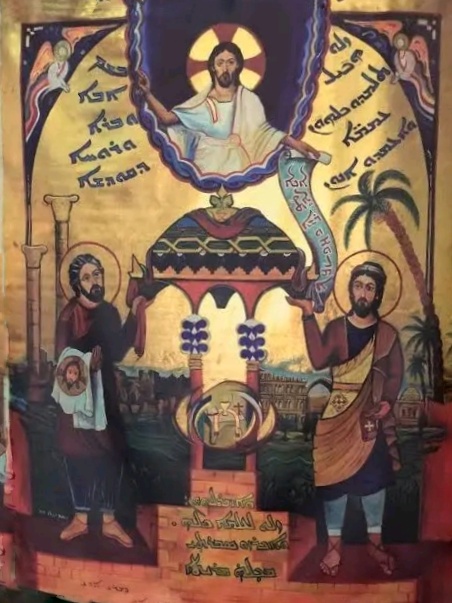
The Teaching of Addai, preserved in Syriac, presents Addai as the apostolic envoy who came to Edessa and preached in the court of King Abgar. The narrative became one of the foundational stories through which Syriac Christians remembered the Christian beginnings of their city.13
The surviving form of the Teaching belongs to Late Antiquity rather than to the first century itself. Historians therefore read the account as sacred memory and as evidence for how later Edessene Christians understood their origins, not as a contemporary record of every event it describes.12
Within the tradition of the Church of the East, Addai is remembered together with Mari. Their names remain joined in the ancient Eucharistic tradition known as the Anaphora of Addai and Mari.1
A fuller life
The person, the memory, the legacy.
These chapters bring the historical record and the received tradition into a longer narrative. Where the surviving evidence is hagiographical or uncertain, the language says so directly.
Edessa remembers a beginning
The Teaching of Addai places the apostle inside Edessa’s celebrated Abgar tradition. The story begins with an exchange between King Abgar and Jesus, continues with Addai’s arrival after the resurrection, and presents healing, hospitality, and public teaching as the means by which the city receives the Gospel.12
The life preserved in a later text
The Syriac Teaching is not a diary from the apostolic age. Its literary form reflects the concerns of Christians in late-antique Edessa, including the authority of local teaching, the memory of the city’s archives, and the desire to connect an established Syriac community to the apostles. Its value therefore lies both in the tradition it transmits and in the world of the later community that shaped it.13
A name carried by worship
Addai’s memory outlived the political world of Edessa because it entered the Church’s language of origin and prayer. Joined with Mari, his name marks the East Syriac Eucharistic tradition and expresses the conviction that the churches east of the Roman frontier received an apostolic inheritance of their own.13
Study further
Sources & further reading.
These records provide historical orientation and bibliography. Hagiographical tradition and documented chronology are identified separately throughout this profile.