Monastics Late 7th century
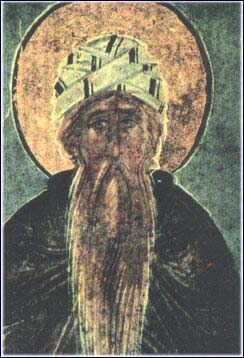
Mar Isaac of Nineveh
ܐܝܣܚܩ ܕܢܝܢܘܐ
Writer of the inner life
Mar Isaac of Nineveh writes toward the hidden places of the heart. His teaching returns again and again to mercy, humility, prayer, and the patient healing of the person. Readers across many Christian traditions have recognized in his words an invitation to become compassionate toward all creation.
- Remembered in
- Beth Qatraye · Nineveh
- Vocation
- Monastics
- Period
- Late 7th century
Life & memory
The life remembered.
The hagiographical tradition recorded by Syriaca.org remembers Isaac as a late seventh-century monastic author from Beth Qatraye who briefly served as bishop of Nineveh before returning to the solitary and monastic life. These details belong to the received life of the saint rather than to a contemporary biography.1
His ascetical writings were composed in Syriac and circulated far beyond the Church of the East through ancient translations. That wide reception made him one of the most influential Syriac spiritual writers in global Christianity.12
Isaac’s works are not a systematic biography. The details of his life remain limited, while the spiritual teaching preserved under his name is extensive. A responsible profile therefore gives greater confidence to his literary legacy than to later attempts to fill every gap in his story.12
A fuller life
The person, the memory, the legacy.
These chapters bring the historical record and the received tradition into a longer narrative. Where the surviving evidence is hagiographical or uncertain, the language says so directly.
From Beth Qaṭraye to Nineveh
Isaac came from Beth Qaṭraye, the Syriac Christian region associated with the Gulf. Tradition remembers his consecration as bishop of Nineveh and a brief episcopate, followed by withdrawal from office and a return to the solitary life. Later notices place his final years in the monastic landscapes of Khuzistan and connect his burial with the monastery of Rabban Shabur.12
The hidden work of the heart
Isaac’s surviving discourses are less a chronological autobiography than a map of inner transformation. They address stillness, prayer, tears, discernment, compassion, the reading of Scripture, and the patient purification of desire. Different collections of his writings survive, and modern scholarship continues to study their transmission and attribution.12
A teacher beyond one communion
Translations carried Isaac’s teaching into Greek, Arabic, Georgian, Slavonic, and modern languages. Readers from many Christian traditions came to know him as Isaac the Syrian, often without knowing the East Syriac setting from which he emerged. His wide reception is itself part of his life: a local monastic voice became a shared teacher of mercy.12
Study further
Sources & further reading.
These records provide historical orientation and bibliography. Hagiographical tradition and documented chronology are identified separately throughout this profile.